THREE:Would you prevent crimes, contrive that the laws favour less different orders of citizens than each citizen in particular. Let men fear the laws and nothing but the laws. Would you prevent crimes, provide that reason and knowledge be more and more diffused. To conclude: the surest but most difficult method of making men better is by perfecting education.[20]
FORE:It would also seem to demand no great insight to perceive that a voluntary intention must be a universal attribute of a criminal action. No one would think of punishing a man who in his sleep killed another, although, if the injury to society be the measure of punishment, his crime is equivalent to intentional homicide. Yet at Athens an involuntary murderer was banished until he could, give satisfaction to the relatives of the deceased; and in China, though the penal code generally separates intentional from accidental crimes, anyone who kills a near relation by accident or commits certain kinds[72] of arson by accident undergoes different degrees of banishment and a fixed number of bamboo strokes.[40]
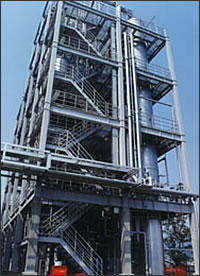
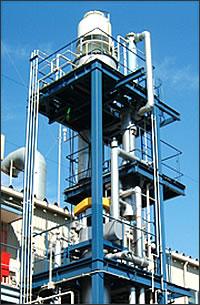
Methanol refinement systems, amyl alcohol refinement systems, ethanol refinement systems, hexanol distillation systems, propanol refinement systems, cyclohexanol distillation systems, isopropanol dehydration systems, ethylene glycol recovery systems, and butanol distillation systems.
FORE:I do not pretend to diminish the just wrath these crimes deserve; but, in indicating their sources, I think myself justified in drawing one general conclusion, and that is, that no punishment for a crime can[231] be called exactly just¡ªthat is, necessary¡ªso long as the law has not adopted the best possible means, in the circumstances of a country, to prevent the crimes it punishes.
Hexane distillation systems, tall oil distillation systems, benzene distillation systems, lubricating oil refinement systems, xylene-free distillation systems, low-boiling gas distillation systems, ethylbenzene recovery systems, fusel oil distillation systems, naphthalene distillation systems, propylene recovery systems, and turpentine oil distillation systems.
FORE:Torture, again, is inflicted upon an accused man in order to discover his accomplices in crime. But if it is proved that it is not a fitting method for the discovery of truth, how will it serve to disclose accomplices, which is part of the truth to be discovered? As if a man who accuses himself would not more readily accuse others. And is it just to torment men for the crimes of others? Will not the accomplices be disclosed from the examination of the witnesses and of the accused, from the proofs and whole circumstances of the crime; in sum, from all those very means which should serve to convict the accused himself of guilt? Accomplices generally fly immediately after the capture of a companion; the uncertainty[155] of their lot of itself condemns them to exile, and frees the country from the danger of fresh offences from them; whilst the punishment of the criminal who is caught attains its precise object, namely, the averting of other men by terror from a similar crime.Penal laws are the expression of the moral sentiments of mankind, and either are as variable as the other. In Holland it was once a capital offence to kill a stork, and in England to cut down a man¡¯s cherry-tree. For a Roman lady to drink wine was as heinous a sin as adultery, for either of which she incurred the extreme sentence of the law. In Athens idleness was for a long time punishable; though to a Spartan an Athenian fined for idleness seemed to be punished for keeping up his dignity. In Mexico drunkenness was a graver crime than slander; for whilst the slanderer lost his ears or lips, the drunken man or woman was clubbed or stoned to death.
Ether distillation systems, camphor distillation systems, epichlorohydrin distillation systems, aniline distillation systems, dioxane refinement systems, acetonitrile distillation systems, furfural refinement systems, formalin distillation systems, cyclohexane distillation systems, monoethanolamine rectification systems, polyglycol ether distillation systems, dimethylformamide recovery systems, acrylic glycol ether distillation systems, acrylonitrile refinement systems, acetone recovery systems, pyridine distillation systems, methyl ethyl ketone recovery systems, picoline distillation systems, methyl isobutyl ketone recovery systems, and acetaldehyde recovery systems.